NSW Abortion Rights Under Attack
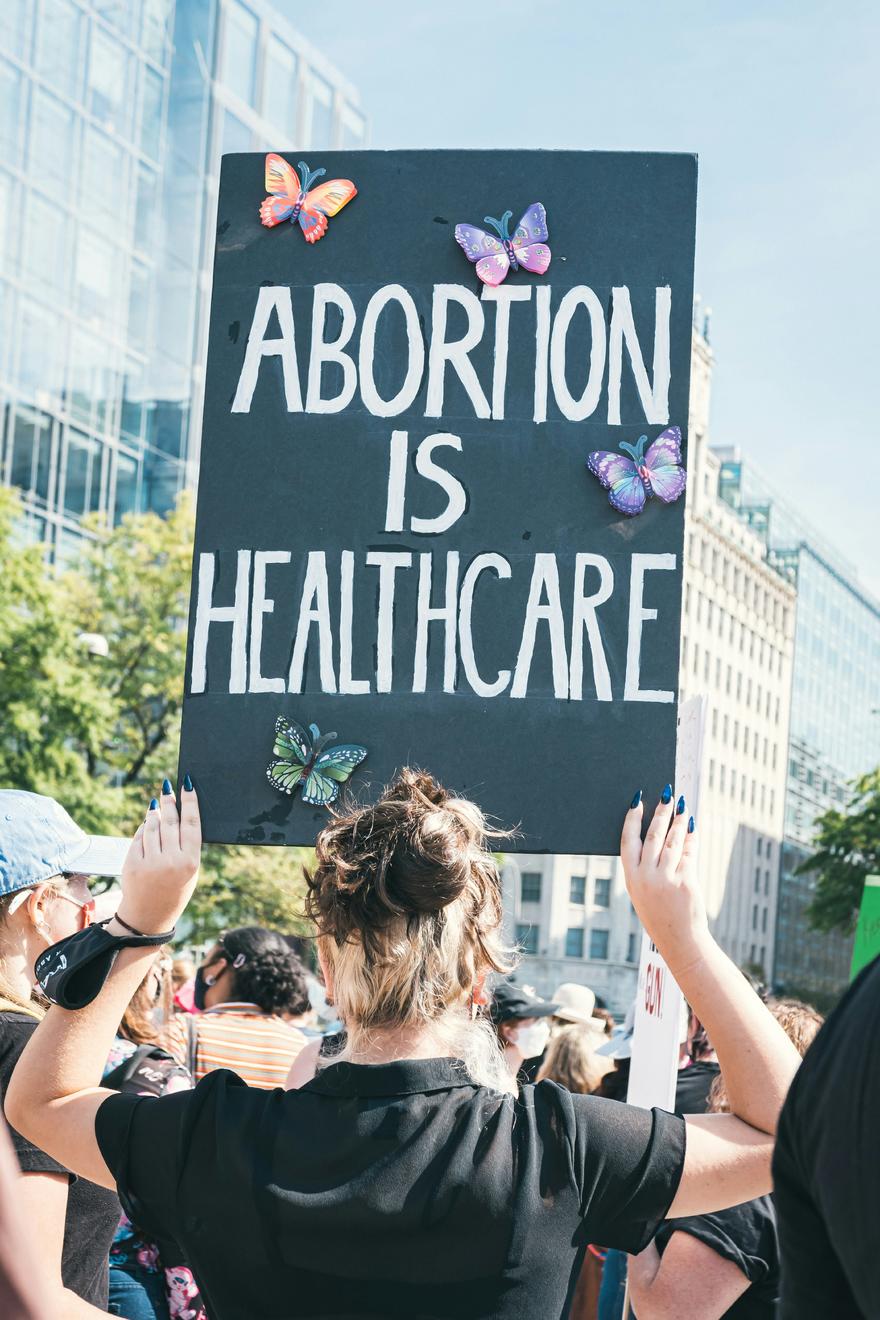
In October 2019, NSW decriminalized abortion. The Family Planning NSW website states that as a result of the Abortion Law Reform Act 2019:
- Women and pregnant people are no longer at risk of prosecution for procuring their own abortion and doctors are able to perform an abortion after gaining informed consent up to 22 weeks of pregnancy.
- After 22 weeks of pregnancy, abortions must occur in a hospital or approved health facility by a specialist medical practitioner who has consulted with another practitioner.
- Medical practitioners who have a conscientious objection to abortion must provide information about how to contact or locate a medical practitioner who is reasonably believed not to have a conscientious objection or transfer care to another registered health practitioner or to a health service provider at which the termination can be performed.
Alarmingly, our reproductive rights are under attack.
Last year, conservative MP John Ruddick tabled a bill in the NSW Upper House known as the Abortion Law Reform Amendment (Sex Selection Prohibition) Bill 2025. The NSW parliamentary website states it is “An Act to prohibit the performance of terminations for the purposes of sex selection; and for related purposes.”
NSW Legislative Council (Upper House) MPs will vote on this bill on 3rd June 2026.
Why is this happening?
The first, surface-level reason is that in May 2025, researchers from Edith Cowan University published a report on birth data collected during the period 1994-2015 in NSW and WA. The researchers looked at sex ratio at birth (SRB) as an indirect measure of possible sex-selected abortions. [Statistically there a pretty even chance of having a boy or girl baby, so a skewed ratio of boys to girls being born after a history of previous abortion is sometimes considered an indicator of sex-selective abortion occurring at a population level.]
The ECU study noted a sex-ratio at birth (skewed towards boy babies) amongst mothers who were born in some countries, particularly noting China and India. This was more pronounced in certain family structures (e.g. among Chinese-born mothers who already had two daughters, the likelihood of them having a boy baby as the third child was 1.34, or 4:3, which is above the naturally expected 50/50 chance of having a boy). Skewed sex ratios were more prevalent amongst overseas-born cohorts with higher induced abortion rates in early pregnancy than Australian-born counterparts, and those higher induced abortion rates coincided with the introduction of non-invasive prenatal testing becoming available in Australia (NIPT, which screens for various chromosomal conditions and can also report on the sex of the foetus as early as 10 weeks gestation).
But research is just that, research, and not a reason in itself to seek changes to legislation. The real, and much more troublesome, reason is that anti-abortion campaigners are highly organised, highly funded and ever-ready to jump on reports like this to cause outcry and chip away at abortion rights. Slogans like “save our girls” have been effective in eroding hard-won reproductive rights in the US and other countries, and that is what they are hoping will happen here too: the incremental recriminalisation of all abortions.
[If you are interested in how abortion was once a non-issue in the US, chosen to become a contentious wedge issue by religious organisations, and how they have worked to achieve their aims over a number of decades, this podcast episode is very enlightening and somewhat terrifying.]
What the current bill before NSW proposes
- Any person (including health professionals, lay people and potentially even the pregnant woman/pregnant person themself) be prohibited from arranging for, permitting, performing, or assisting in the performance of, a termination on a person for the purposes of sex selection;
- Health professionals be deemed guilty of professional misconduct if they do any of the above, and open to criminal prosecution including potential fines or gaol time for doing so;
- Renders health professional indemnity insurance void on terminations performed for purposes of sex selection;
- Health professionals be banned from arranging for, permitting, performing or assisting in the performance of any further pregnancy terminations for any reason if they are found guilty of doing so as per point 1;
- Requires the Secretary of the Ministry of Health to conduct a review under the Abortion Law Reform Act 2019, section 16 every 3 years.
Sex-selective abortion bans do not “save girls”, but they do put patients, health professionals and reproductive rights in danger
Published in response to the proposed inclusion of a sex-selective abortion ban in WA abortion legislation, the Human Rights Law Centre wrote that bans on sex-selective abortion would:
"have harmful and discriminatory impacts on the health of women, while doing nothing to address the societal attitudes and structures that see women discriminated against in many facets of their lives."
The Human Rights Law Centre also noted five key ways that legislative bans on sex selection have negative and discriminatory impacts on women:
- Good health care depends on an open and trusting relationship between doctor and patient. Legislative bans on sex selective abortion undermine the doctor-patient relationship by putting doctors in the position of having to police and second-guess their patients for fear of potential criminal prosecution.
- A sex selection ban is likely to result in the stigmatization and racial profiling of People of Colour.
- If patients fear being treated with suspicion by their doctors, they may delay treatment or withhold information, or even be pushed towards unsafe options, all of which compromise good health outcomes.
- A sex selection ban could discourage pregnant people carrying sex-linked genetic conditions from having honest conversations with their doctors.
- The medical profession already practices within a highly regulated ethical and legal framework.
Importantly, sex-selective abortion bans do not work to change sex ratios at birth
Certain states in the USA have previously implemented sex-selective abortion bans. These bans were not associated with any change to sex ratios at birth in the five years after implementation. This could mean many things, for example
- More people who want sons turned to IVF and inseminated only embryos with XY chromosomes;
- People were forced into unsafe methods of abortions;
- Some patients and health professionals found ways around the ban.
There are better ways of addressing discrimination against females than banning sex-selective abortion
The authors of the ECU study proposed multiple shorter-term strategies to rebalance the skewed sex ratio at birth. A ban on sex-selective abortion was not one of them. This has not stopped anti-abortion campaigners for pushing for one anyway, while ignoring their actual suggestions.
The Human Rights Law Centre is clear on what the situation is, and what would make the greatest impact. Their website states:
- WHO and UN agencies have found that in parts of the world where male-biased sex-selection is a problem, the drivers are deeply entrenched social, economic, cultural and political factors that see women discriminated against in all facets of their lives.
- Restrictions on healthcare shift the burden of gender discrimination onto women and their doctors, with considerable risk of harm to those who are denied access to abortion care.
- Sex-selective abortion bans do nothing about the societal attitudes and structures that see women discriminated against in many facets of their lives. Instead, social and economic policy responses are needed to tackle gender discrimination in all its forms, for example, measures to eliminate gendered wealth inequality and family violence.
In short, if we want all births considered equally valuable, we need to create a society where it is not a disadvantage to be born female/assigned female at birth. Restricting access to reproductive health care with abortion bans like this one completely undermine this aim.
This bill aims to restrict abortion access and incrementally increase public acceptance of abortion bans
Sex-selective abortion bans aren’t really possible to enforce in practice. What they do is make it
- more likely health professionals will second-guess themselves and feel uneasy arranging, assisting or performing abortions, such that some will stop providing this necessary healthcare in some or all cases;
- easier for doctors with anti-abortion beliefs to profile individuals and refuse necessary health care;
- and make it harder for vulnerable patients (particularly those who may already be geographically isolated, be impacted by a language barrier, etc.) to access the timely care they need.
We’ve seen this happen before in the US. This passage from the report “Replacing Myths with Facts: Sex-Selective Abortion Laws in the United States”:
"Proponents of sex-selective abortion bans have explicitly stated that the laws are actually part of the effort to restrict access to abortion entirely. In 2008, Steven Mosher, head of the Population Research Institute (a leading anti-abortion group), stated: “I propose that we—the pro-life movement— adopt as our next goal the banning of sex- and race-selective abortion.” And in a 2008 article, an influential conservative thinker and law professor declared that the “key to eroding Roe v. Wade . . . is to pass a number of state or federal laws that restrict abortion rights in ways approved of by at least fifty percent of the public,” such as “a ban on abortion for sex selection.” Following this lead, anti abortion groups have created model legislation to ban sex-selective abortion."
The politicians who raise and support such bills generally push for a ban on abortion in general, achieved through incremental means, and lobby for restrictions or bans on funding for reproductive health services.
Why does the bill before NSW parliament propose a review every three years?
The 2019 act included a section that required the Ministry of Health to conduct a review within 12 months of the Act commencing to determine if sex-selective abortions were occurring in NSW, then provide a report and recommendations on this to the Minister and in turn the Parliament, but did not specify further reviews into the topic. The inclusion of a requirement of a three yearly review is likely a tactic to have this same “save our girls” conversation in parliament every three years until something sticks and the anti-abortion campaigners get the result they want.
[And note that we don’t even know if this is currently happening in NSW, because sex data of a foetus is not required for an abortion to be undertaken or performed, and is therefore not recorded to be analysed. The 2025 study from Edith Cowan was looking at indirect data only, from a study period with the most recent data being collected eleven years ago.]
What happens next?
The NSW Legislative Council (Upper House) MPs will vote on the bill on the 3rd of June.
There have been suggestions that votes on this bill may be undertaken as “conscience votes”, where the way individual MPs vote is not released to the parliament or the public, so we can not rely on party policies dictating how the vote will go.
If it passes through the Legislative Council (Upper House), it will be sent to the Legislative Assembly (Lower House) to be debated and either accepted as is, amended and accepted, or rejected. If it is accepted, the NSW Governor signs off on the paperwork, and the Act becomes law.
More info on how laws are made in NSW can be found here.
What you can do if you live in NSW
- Email your representative in NSW Parliament. You can either:
- Use this tool and template to submit an email to your state parliamentary rep (and CC all the Upper House MPs who will vote on June 3) at the same time, OR
- Email your local rep individually from your own email server. First find your electorate then get the MPs email address from the parliamentary directory. If you go this route you can also CC in some key contacts:
- Chris Minns, NSW Premier, using this form: office@premier.nsw.gov.au
- Ryan Park, Minister for Health: office@park.minister.nsw.gov.au
- Jodie Harrison, Minister for Women: office@harrison.minister.nsw.gov.au
- Rose Jackson, Minister for Mental Health, Youth and Housing: office@jackson.minister.nsw.gov.au
- Penny Sharpe, Government Leader in the Legislative Council: office@sharpe.minister.nsw.gov.au
- John Graham, Deputy Government leader in the Legislative Council: john.graham@parliament.nsw.gov.au
- Abigail Boyd, Greens and on relevant parliamentary committees: abigail.boyd@parliament.nsw.gov.au
- Jeremy Buckingham, Legalise Cannabis Party: jeremy.buckingham@parliament.nsw.gov.au
- Emma Hurst, Animal Justice Party: emma.hurst@parliament.nsw.gov.au
A friend in the know tells me the parliamentary offices don’t necessarily read every email, but they do tally up the number they receive on certain topics. If you can send a single sentence email with a subject line like “Oppose the Sex-Selective Abortion Amendment” or “Uphold existing abortion rights” that will still be helpful!
- Send this blog and/or the email submission template with people you know who care about this issue and encourage them to do the same;
- Share it on your social media, include it in your work newsletter etc.;
- Sign a petition (helpful, but if you can only manage one action, I would prioritise emailing);
- Show up to NSW Parliament House on 2nd June to oppose the anti-abortion rally that is happening on the front steps that day;
- Support organisations that lobby against the erosion of reproductive rights, such as the NSW Pro-Choice Alliance, led by the Women’s Electoral Lobby, or MSI Australia;
- Be aware of and support (practically or financially) organisations that help people navigating decisions around unplanned pregnancy in your local area with unbiased information and non-judgemental support, like Zoe's Place in Newcastle.
What you can do if you live interstate
- Share this blog and/or the "email your MP" template form with people you know in NSW who care about this issue;
- Check what the laws and battles around abortion in your state are, particularly if you are in SA or QLD;
- Contact your parliamentary reps and let them know that you see what is happening in NSW (and other states) and won’t stand for it in yours;
- Support organisations that lobby against the erosion of reproductive rights, like MSI Australia;
- Become aware of and support reproductive rights organisations that help people navigating decisions around unplanned pregnancy in your local area with unbiased information and non-judgemental support.
A reminder: Do NOT rely on AI as your only source of information on this or any other topic! The AI-generated summary when I Googled “nsw parliament to vote on abortion reform june 2026” provided me with one link to the legislation portal and two links to “voice your stance on the legislation”, both of which are Christian anti-abortion lobby pages. There were no criticisms of the bill or claims its proponents make, or links to human rights organisations or pro-choice pages in the AI summary.

Categories
- News (34)
- Breastfeeding (22)
- Post-partum (69)
- Sleep (14)
- Food (7)
- Partners (19)
- Rehab (2)
- Parenting (51)
- Birth (21)
- Pandemic (14)
- Research Update (5)
- Decolonisation (2)
- Covid (14)
- Education (8)
- Motherhood (43)
- vaccines (2)
- Children (9)
- self employed (2)
- government policy (3)
- feminism (11)
- abortion (4)
- lockdown (3)
- infancy (1)
- gentle parenting (10)
- infertility (1)
- parenthood (9)
- isolation (2)
- village (5)
- Pregnancy (8)
- Podcast (2)
- Mental Health (5)
- Career (2)
- Mental Load (1)
- Community (1)
- Technology (1)
- Doula (2)
0 comments
Leave a comment
Please log in or register to post a comment